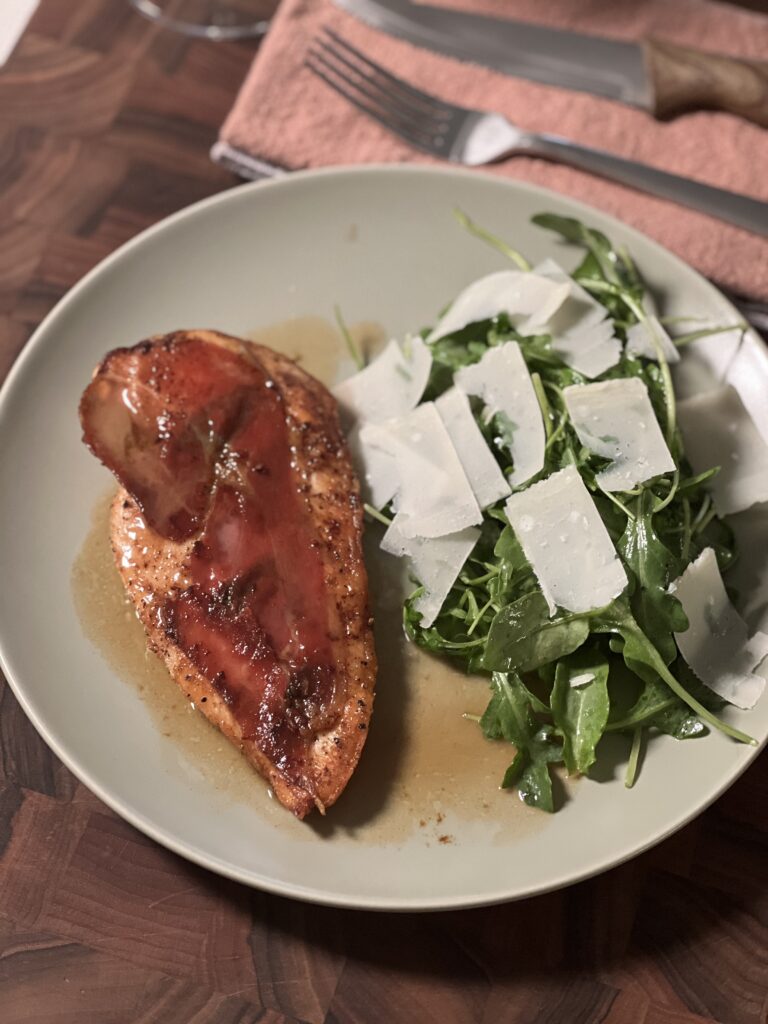
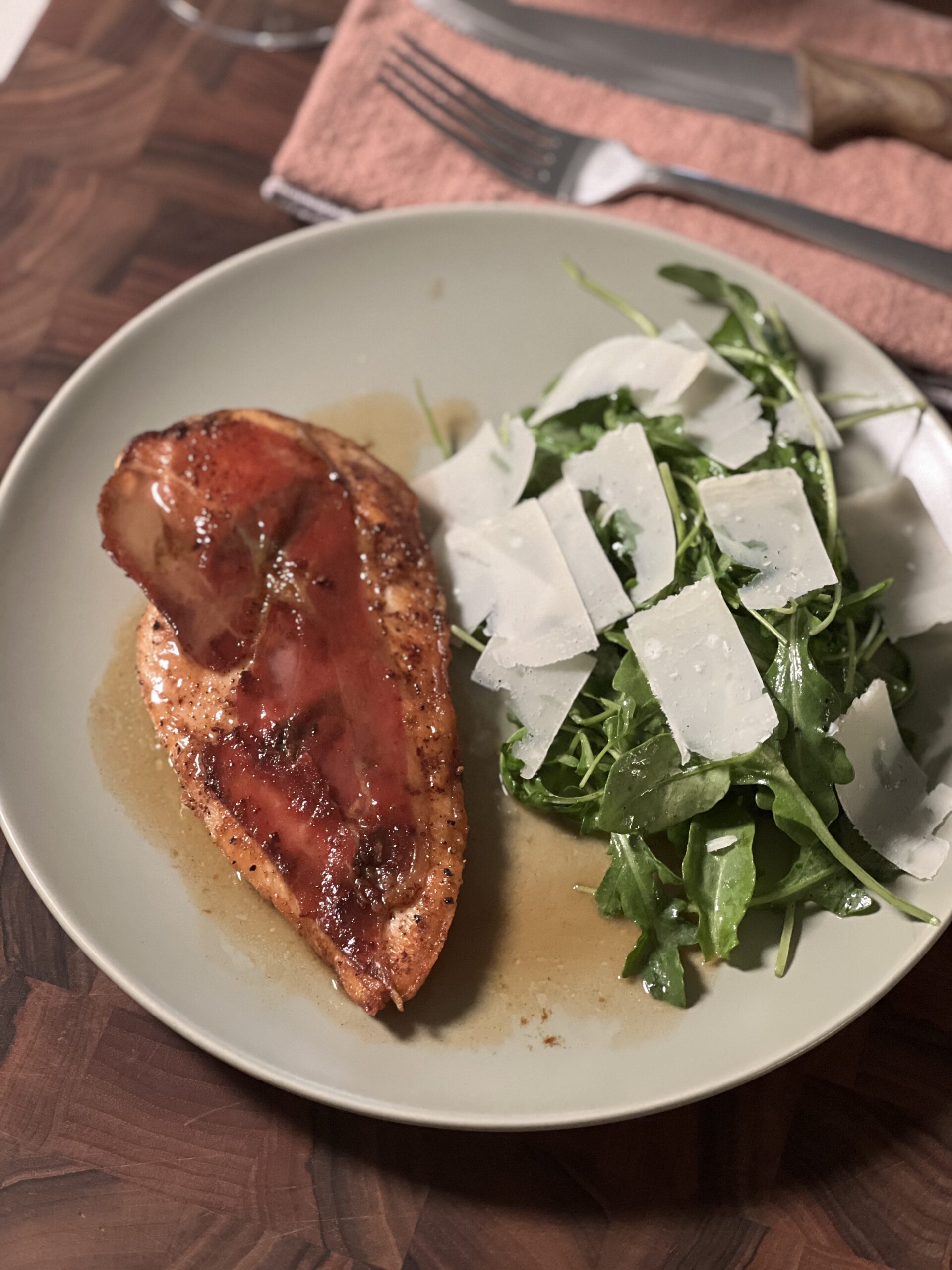
I’ll be honest, “saltimbocca” sounds like something you’d need a culinary degree and possibly a small loan to attempt. It does not sound like something you make on a Tuesday when you also have to do three loads of laundry and pretend to care about a work email. But that’s exactly what it is, and I’m here to let you in on the secret.
What Even Is Saltimbocca?
Saltimbocca alla romana is a classic Roman dish, and the name literally translates to “jumps in the mouth.” Which, sure, is a bold claim for a piece of meat to make about itself, but honestly the dish backs it up. Traditionally it’s made with thin veal cutlets, sage, and prosciutto, seared in butter and finished with a wine pan sauce. It’s simple, it’s old school, and it’s the kind of dish that proves Italian cooking didn’t need fifteen ingredients to be great, just the right four or five treated with respect.
Why I’m Using Chicken
Veal is delicious, but it’s also the ingredient equivalent of showing up to a potluck with a $40 bottle of wine. Nobody’s mad about it, but it’s a lot for a random weeknight. Chicken breast does the same job for a fraction of the cost and effort, and it’s already sitting in most of our fridges anyway. Same technique, same sage and prosciutto payoff, way less “am I hosting a dinner party or just trying to feed myself” energy.
Why This Actually Works on a Weeknight
Here’s the thing about saltimbocca that nobody tells you: it moves fast. You’re pounding out cutlets, seasoning them, slapping on some sage and prosciutto, and searing them in a hot pan for a few minutes a side. Then you make a pan sauce in the same skillet while the chicken rests, which is just a fancy way of saying “I deglazed a pan and added butter,” a skill that will serve you well for the rest of your life. Start to finish, you’re looking at about 30 minutes, most of which is just standing near your stove feeling like you know what you’re doing (you do, I promise).
A Few Notes Before You Start
Flour one side of the cutlet only. This isn’t me being precious about technique, it’s because that floured side is the one that goes into the pan first and gives you that golden, slightly crisp crust, while the other side holds the sage and prosciutto without turning into a soggy mess.
Let the chicken rest for 8 to 10 minutes after it comes out of the pan. I know, I know, resting meat is the “eat your vegetables” of cooking advice, everyone says it and nobody wants to hear it. But it genuinely lets the chicken finish coming up to temperature and keeps all that moisture where it belongs, which is inside the chicken and not all over your cutting board.
Use a large skillet. You want room to let the cutlets sear properly without crowding the pan, because crowded pans steam instead of sear, and steamed chicken is nobody’s love language.
4
servings10
minutes20
minutes30
minutesChicken saltimbocca sounds like a fancy Italian flex, but it's really just seared chicken, sage, prosciutto, and a butter wine pan sauce that comes together in about 30 minutes. Same technique the Romans have been using forever, just with chicken instead of veal so it's actually a normal Tuesday dinner.
Ingredients
2 chicken breasts, cut in half to make 4 cutlets
Salt and pepper
1/2 cup all purpose flour
4 slices prosciutto
8 to 12 fresh sage leaves (2 to 3 per cutlet)
3 tablespoons extra virgin olive oil
7 tablespoons butter, divided
1/2 cup white wine (or chicken stock)
Directions
- Thoroughly dry the chicken cutlets, then salt and pepper both sides of each.
- Coat one side of each cutlet in flour.
- On the other side, lay 2 to 3 sage leaves on each cutlet.
- Lay a slice of prosciutto over the sage leaves on each cutlet and press it in to help it adhere to the chicken.
- In a large skillet over medium heat, add the olive oil and 3 tablespoons of butter. Once the butter is melted, combined with the oil, and shimmering, add the chicken cutlets to the pan, floured side down.
- Cook for 3 to 4 minutes, until the chicken has a golden crust on the bottom.
- Flip the cutlets prosciutto side down and cook until the chicken reaches 155 degrees.
- Transfer the cooked cutlets to a plate and let rest for 8 to 10 minutes to come up to temperature and allow the juices to settle. If cooking in batches, keep resting cutlets warm in a preheated 200 degree oven.
- Once all the chicken is out of the pan, add the white wine (or chicken stock) and reduce by half, about 4 minutes.
- Turn off the heat and add the remaining 4 tablespoons of butter, stirring until emulsified.
- To serve, pour the pan sauce over the chicken cutlets.

