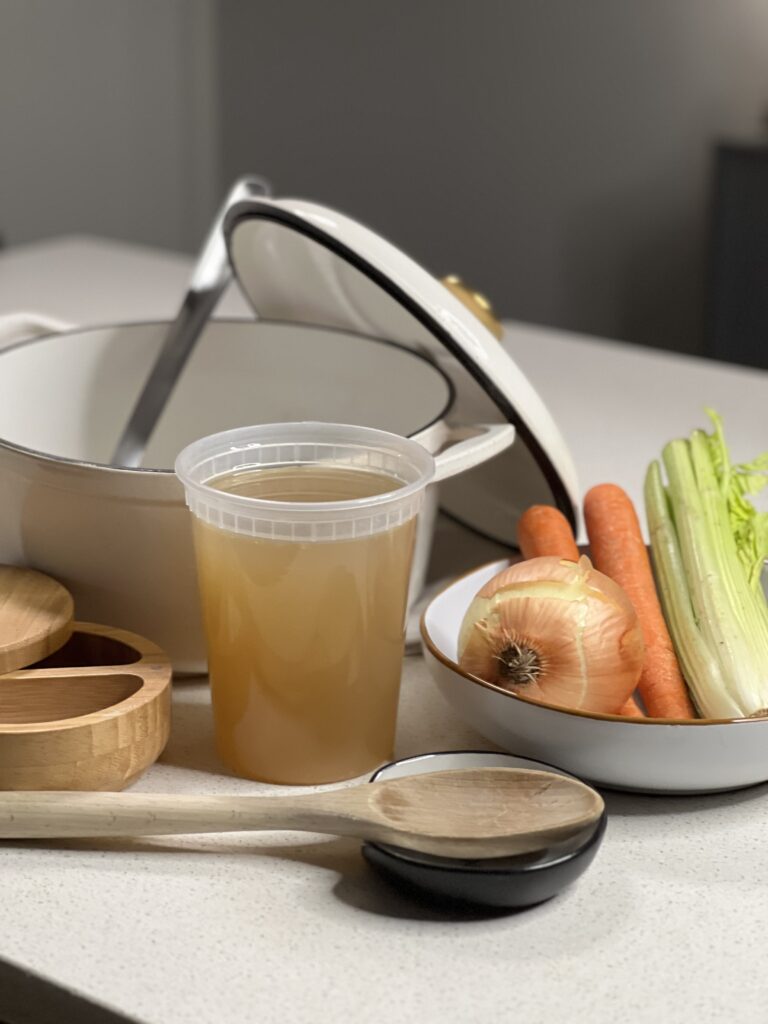
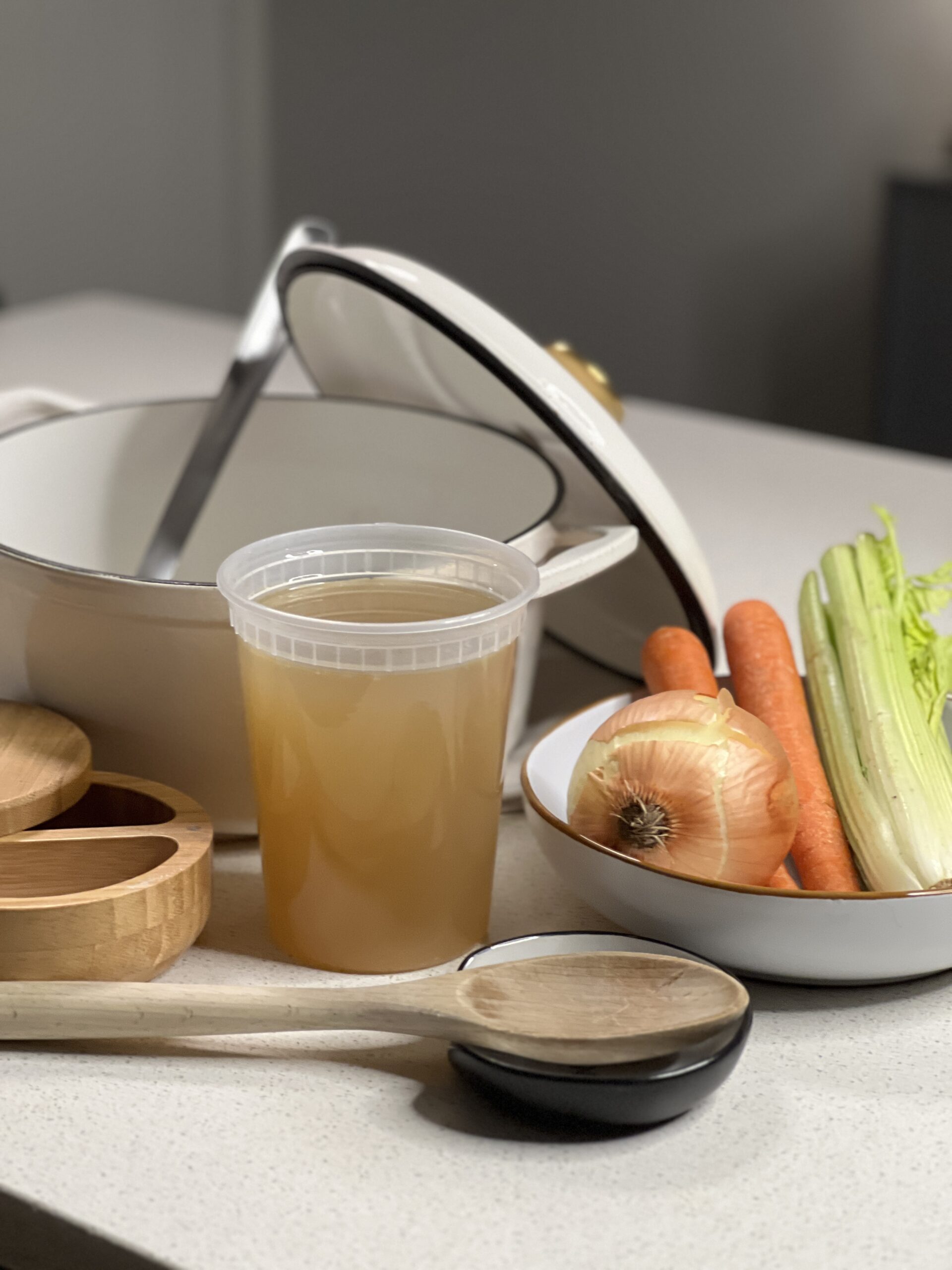
Chicken Stock: Liquid Gold From a $7 Grocery Store Hero

If you’ve ever brought home a rotisserie chicken with the noble intention of “using it for multiple meals,” congratulations — you’re already halfway to homemade chicken stock. The humble carcass of that grocery store MVP is secretly a flavor goldmine, and turning it into stock is one of the most satisfying kitchen moves you can make.

At Forking Fearless, we believe in two things: cooking boldly and wasting absolutely nothing delicious. Making stock from leftover bones is the culinary equivalent of finding a $20 bill in your winter coat pocket. You already paid for the chicken — now the bones are about to pay you back.

And before the internet comments section arrives with torches and pitchforks: yes, we know the difference between broth and stock. If you want the full nerdy breakdown, check out our deep dive here: “Chicken Broth vs. Stock – Let’s Settle This Once and for All.”

Spoiler alert: stock gets its body and richness from bones, which means the rotisserie carcass you were about to toss is actually the star of the show.

Why Rotisserie Chicken Stock Works So Well

Rotisserie chickens are already seasoned and roasted, which means you’re starting with bones that have flavor baked right into them. That little bit of leftover meat clinging to the bones? Even better. As it simmers, it releases savory goodness that builds a deeply satisfying base for soups, sauces, risotto, and basically anything that could use a little culinary glow-up.

The vegetables in this recipe — onion, carrot, and celery — form the classic mirepoix, the aromatic backbone of countless soups and stocks. Herbs like parsley and thyme layer in freshness, while peppercorns add subtle warmth.

And the best part? This recipe is forgiving. Stock doesn’t demand perfection. It just wants time, heat, and a big pot.

What Makes a Good Chicken Stock?

A good stock has three things going for it:

• Body – Gelatin from the bones gives stock that silky texture.

• Depth – Long simmering extracts savory flavor from bones and vegetables.

• Balance – Salt and a touch of bouillon (optional, but very helpful) bring everything into focus.

Once it’s finished, you’ll have a pot of rich, savory liquid that instantly upgrades anything it touches.

Soup? Better.

Rice? Better.

Pan sauce? Better.

Your general outlook on life? Honestly… probably better.

Let’s make some.

Rotisserie Chicken Stock

Recipe by Jarrad HowardDifficulty: Easy
Yield

2

Quarts
Prep time

10

minutes
Cooking time

2

hours 
Total time

2

hours 

10

minutes

Ingredients

  • Leftover bones and meat from 1 rotisserie chicken

  • 1 onion, quartered

  • 2 carrots, cut into 1 inch pieces

  • 2 celery stalks, cut into 1 inch pieces

  • 1 bay leaf

  • 1 tsp peppercorns

  • 4–6 sprigs parsley

  • 4 sprigs thyme

  • 3 quarts water

  • Salt to taste

  • 2 cubes chicken bouillon OR 1 tbsp Better Than Bouillon (optional)

Directions

  • Place the chicken bones and any leftover meat into a large stockpot. Add the onion, carrots, celery, bay leaf, peppercorns, parsley, and thyme.
  • Pour in 3 quarts of water. The ingredients should be comfortably submerged.
  • Bring the pot to a boil over medium-high to high heat. Give everything a good stir, then cover the pot and reduce the heat to a gentle simmer.
  • Simmer for about 1½ hours. During this time the bones release gelatin, the vegetables soften, and your kitchen starts smelling like a soup shop in the best possible way.
  • Using a slotted spoon, remove the large solids from the pot. Pour the remaining liquid through a fine strainer into a large bowl to remove any smaller bits.
  • Return the strained stock to the pot and simmer for another 30 minutes with the lid slightly ajar. This reduces the liquid slightly and intensifies the flavor.
  • Taste the stock and season with salt as needed. If you want a deeper savory punch, stir in the bouillon or Better Than Bouillon.
  • Let the stock cool slightly before transferring to airtight containers.

Notes

  • Store in the refrigerator for up to 4 days or freeze for up to 6 months.

Save Room for More

Baked Grilled Cheese (Yes, the oven. Trust the process.)
Roasted Red Pepper Bisque with Shaved Asiago & Crispy Garlic Panko
Crispy Chicken Cutlets (The Weeknight Hero You Didn’t Know You Needed)