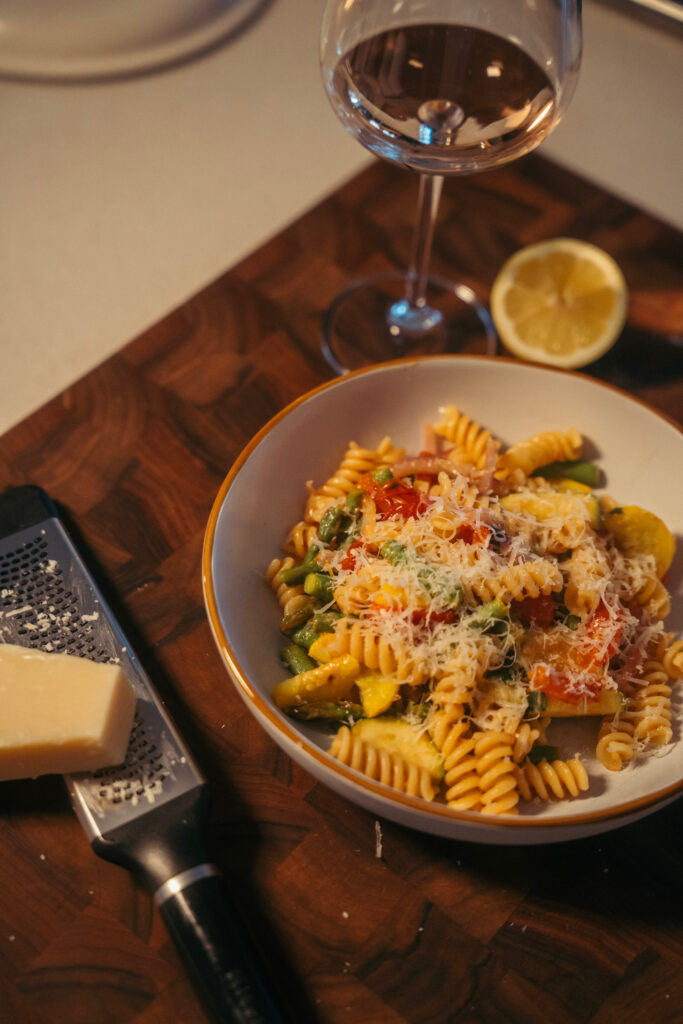
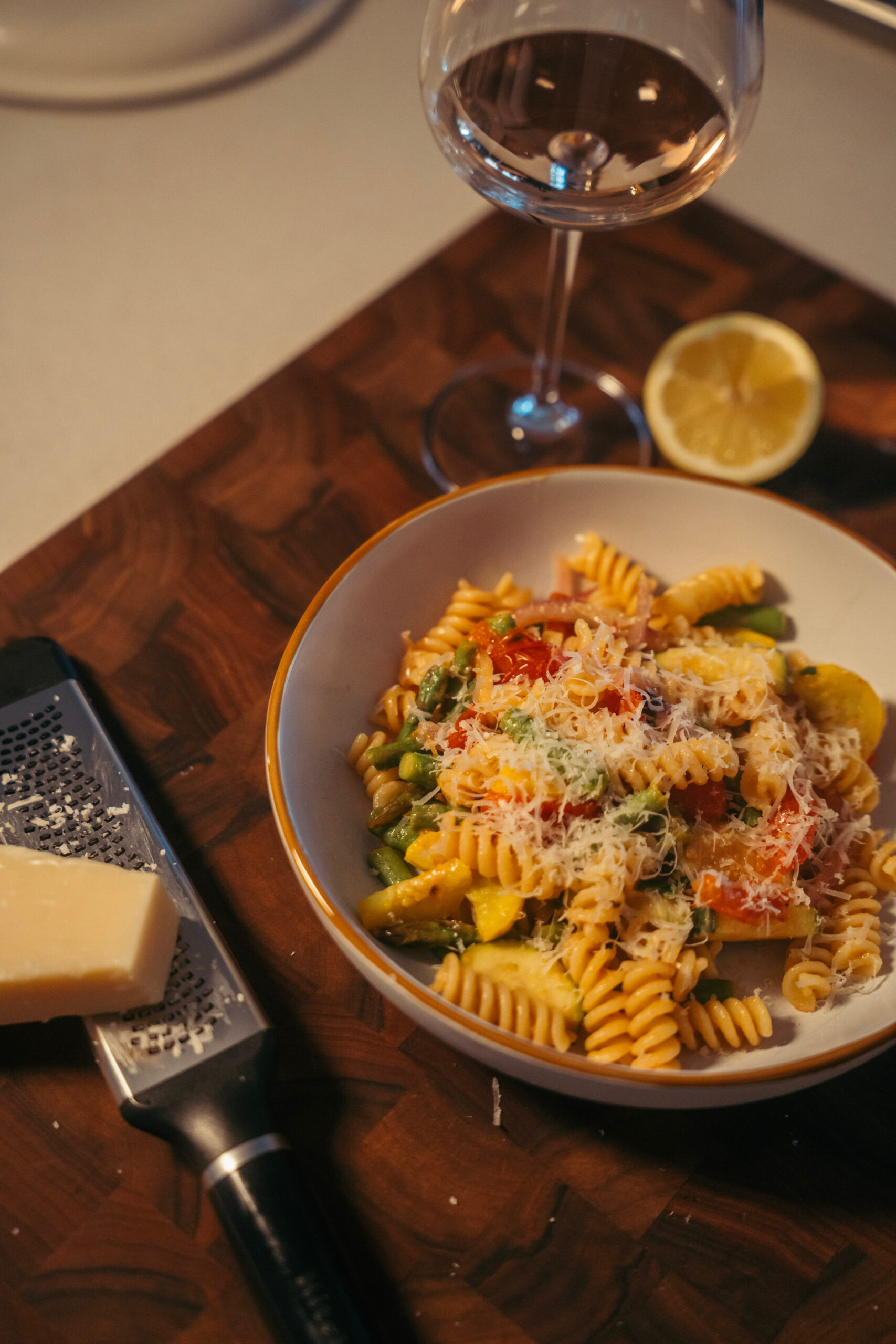
There is a specific kind of tired that hits right when you close the front door behind you. Not sleepy tired. Depleted tired. The kind where you stand in your kitchen for a solid 45 seconds just looking at the counter like it owes you something.
I have been that person. I am frequently that person. And over time I have learned that what I need in that moment is not a project. It is not a challenge. It is not a dish that requires me to consult three browser tabs and dirty every pan I own. What I need is something that feels like dinner. Real dinner. The kind that looks like you tried, tastes like you knew what you were doing, and comes together faster than you think it should.
Pasta Primavera is that dinner.
What Even Is Pasta Primavera?
Primavera just means spring in Italian, which tracks — the dish is built around whatever fresh vegetables are around. What I did not know until I went down a rabbit hole about it is that Pasta Primavera is not actually Italian. It was invented in New York in the 1970s by a restaurateur named Sirio Maccioni, who threw it together from a mostly empty fridge while visiting a friend in Canada. He brought it back to his Manhattan restaurant, Le Cirque, where his French head chef refused to let it anywhere near his kitchen. So it got cooked in the hallway. Served off-menu. And still somehow became, as the New York Times put it at the time, the most talked-about dish in Manhattan.
A hallway dish that conquered New York. Respect.
Why This Version Works on a Wednesday Night
The original Le Cirque recipe was rich — butter, cream, the works. My version is not that. My version is olive oil, garlic, whatever vegetables I have on hand, and pasta cooked properly in water that actually tastes like something.
It is lighter. It comes together in about the time it takes to boil water and cook pasta, which is to say, not long. And it still feels like a real meal, which after a long day is really all I am asking for.
The after-work angle is not just marketing, by the way. This is genuinely what I cook when I walk in the door and need dinner to happen without a lot of negotiation. A glass of wine. A hot pan. Fifteen minutes. Done.
A Few Things Worth Knowing Before You Cook
Slice the garlic, don’t mince it. This is a small thing that matters. Sliced garlic gives you bigger, softer pieces that mellow out beautifully in the oil and turn sweet and fragrant without burning the way minced garlic can at higher heat. You want that slow, golden warmth, not acrid little brown bits at the bottom of your pan.
Salt the pasta water until it actually tastes like salt. Not ocean water, but not shy either. Pasta absorbs water as it cooks, and if that water has no flavor, neither will your pasta. This is the one step that makes the biggest difference and the one step most people skip.
Cook the vegetables less than you think you need to. Four to five minutes over medium-high heat. You want them bright and just tender, with a little life left in them. Vegetables that have been cooked to submission have given up. You do not want vegetables that have given up. You want vegetables that still have something to say.
The basil, lemon, and cheese go in at the very end, off the heat or right at the finish. The basil will wilt gently from the residual heat. The lemon wakes the whole thing up. The cheese ties it together. These are not garnishes. They are the finish line.
And yes, more cheese on top when you serve it. That is not a suggestion.
When to Make This
Any night you walk in the door and need dinner to save you. That is the honest answer.
Beyond that, it is a great late spring or summer weeknight dinner when zucchini and squash are everywhere and you want to actually use them instead of letting them become a science experiment in your crisper drawer. It works well for a casual dinner with people you like, the kind where nobody is impressed by effort but everyone is happy about good food. It also reheats reasonably well the next day for lunch, which is a bonus you will appreciate at noon the following day.